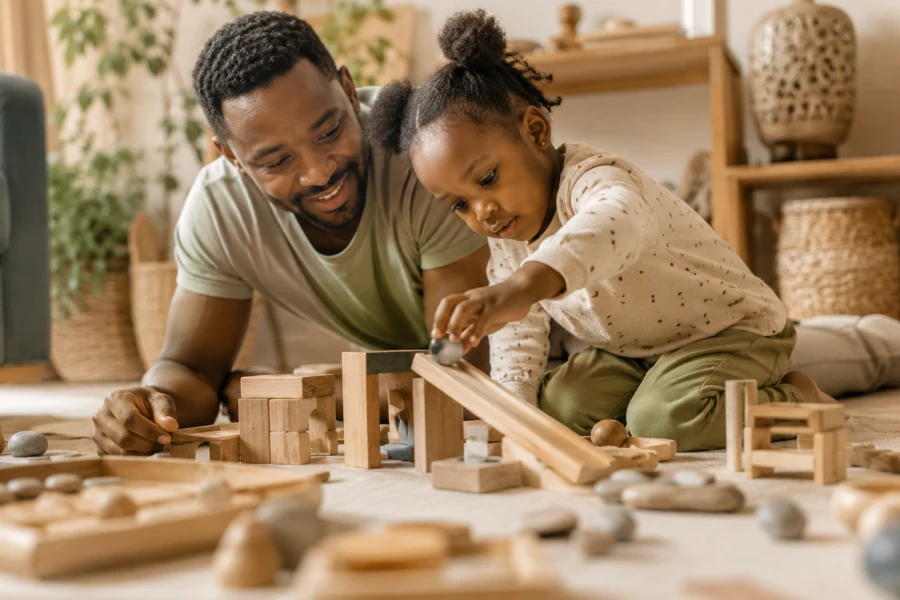
Children rarely begin learning with a request for a formal lesson. They begin by asking what happens when a tower tips or water changes direction. Play based learning activities give those questions room to grow into capability. The activity does not need expensive materials or a perfect plan. It needs a problem a child can explore with hands and attention. A bowl of blocks can become engineering, storytelling, and negotiation at once. A walk outdoors can become sorting, noticing, and explaining patterns. Curiosity becomes more durable when adults do not rush to provide answers. Children learn that their observations are worth following. That lesson can last longer than any single activity.
Set out fewer materials than you think a child will need. A small tray of loose parts invites decisions without overwhelming attention. Try wooden pieces, fabric scraps, measuring cups, or smooth stones. Place them where a child can reach them independently and safely. Avoid explaining every possible use before play begins. A hands-on learning ideas and creative learning invitations resource can help you choose simple starting materials. Watch what the child picks up first and how they use it. Their choices reveal interests that a preplanned worksheet could miss. An inviting setup encourages experimentation without requiring a correct outcome. That freedom makes the learning space feel like a place for discovery.
Repetition often signals deep thinking rather than a lack of imagination. A child may build the same ramp several times with tiny changes. They may pour water between cups until the movements feel predictable. Let the repeated action continue long enough for new questions to appear. Interrupting too quickly can remove the very practice that builds confidence. The activity becomes richer when children control the pace. You can name what you notice without taking over the experiment. For example, ask what changed when the block moved closer. That question keeps ownership with the child while extending their thinking. Repetition creates the foundation for more complex ideas later.
The best next step is often a small twist rather than a new activity. Add a cardboard tube to a block ramp or a timer to sorting play. Offer two containers instead of one and ask where more will fit. Bring in a book, map, or measuring tool after curiosity has already started. These additions introduce challenge without replacing the child’s original idea. A low-prep kids activities with curiosity-led learning collection can keep those extensions practical. Keep the challenge reachable enough that frustration does not dominate the experience. When a child gets stuck, describe the problem before suggesting a solution. That approach supports persistence and flexible thinking. Small challenges give play a path toward growing capability.
Adults support play best when they resist becoming the activity director. Stay close enough to ensure safety and offer language when invited. Let children make choices, change plans, and leave unfinished ideas behind. Your role can be to notice, wonder, and protect the time. Instead of asking what they are learning, ask what they want to try next. A child may answer with action rather than words, and that still counts. Follow their attention before adding your own agenda. This keeps the exchange collaborative instead of evaluative. Children often take bigger intellectual risks when adults remain curious too. Light guidance leaves room for the child’s own competence to appear.
Play can offer families useful clues about interests, strengths, and emerging needs. Notice whether a child enjoys arranging, narrating, building, moving, or observing. Those patterns can inspire future invitations without turning play into assessment. Save a photo of a creation or a note about an unexpected question. Return to the idea later when the child shows interest again. These invitations work because they connect learning to lived curiosity. A family learning routine and age-flexible activities resource can help adults keep ideas fresh without overplanning. The goal is not to capture every outcome for proof. It is to build a home where questions regularly become things children can do. That is how play gradually turns curiosity into capability.
The most useful activities often begin with materials already close at hand. Give children enough time to investigate before offering a new direction. Notice the ideas that return across different days and different materials. Those returning interests can guide the next invitation more naturally than a schedule. Add challenge in small steps so curiosity stays stronger than frustration. Use questions to extend thinking without replacing a child’s own solution. Keep the atmosphere open enough for mistakes, revisions, and surprising detours. What children make matters less than the thinking they practice while making it. A playful home environment can steadily build focus, persistence, confidence, and eager independent exploration across ordinary afternoons. That is the lasting value of giving curiosity practical room in everyday family life together.

Leave a comment