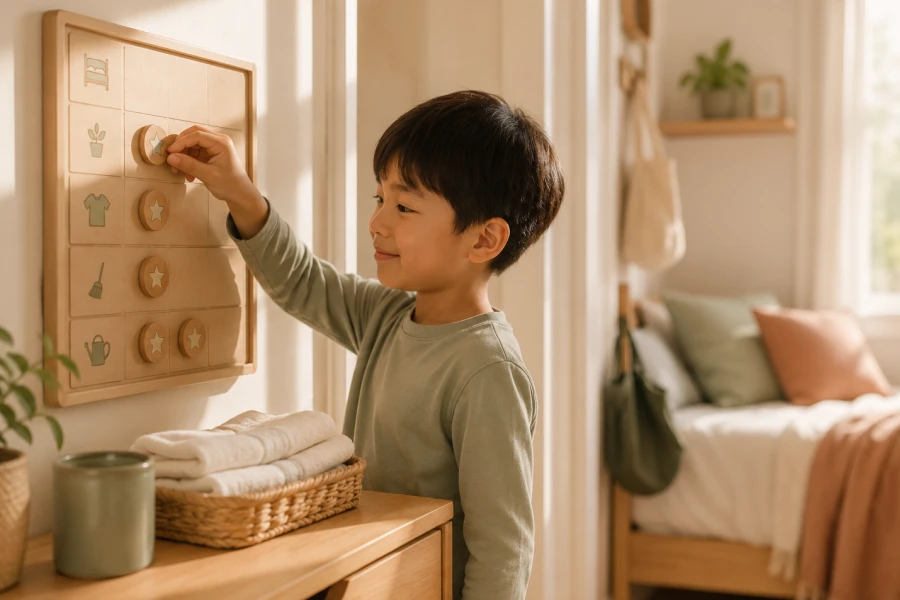
Confidence usually grows through ordinary work that a child can actually finish. It appears when a young person notices, begins, and completes something useful. A chore chart routine for kids can create those small moments repeatedly. The point is not to make home life feel like a workplace. It is to offer a clear role within the family’s shared life. Children often need a task that feels manageable before they need more responsibility. A single finished job can become evidence that they are capable contributors. That evidence matters more than praise delivered from across the room. When expectations stay specific, children can recognize their own progress. Quiet confidence begins with knowing what success looks like today.
Choose the first task by looking for a reliable moment in the day. Putting napkins on the table works because dinner happens regularly. Feeding a pet can work when an adult already supervises nearby. Avoid starting with a job that requires tools, timing, and several reminders. The child should be able to see the beginning and ending clearly. A daily responsibility board and family task organizer can show one dependable job at a glance. Let the task remain the same long enough for the routine to become familiar. Frequent switching can make children feel as though they are always starting over. Early repetition creates fluency, and fluency makes effort feel less intimidating. Start where success is likely, then allow that success to accumulate.
A chart cannot teach a task that a child has never watched closely. Demonstrate the job slowly while naming the important details in order. Invite the child to try beside you before expecting independent completion. Correct one useful detail rather than supplying a long list of flaws. For laundry, show where folded shirts belong and why drawers close afterward. For cleanup, show where crumbs go before sweeping becomes an empty instruction. The routine works better after the skill feels familiar. Children can then use the chart as a memory cue instead of a mystery. Practice protects their dignity because they do not have to guess alone. Teaching first turns follow-through into learning rather than compliance.
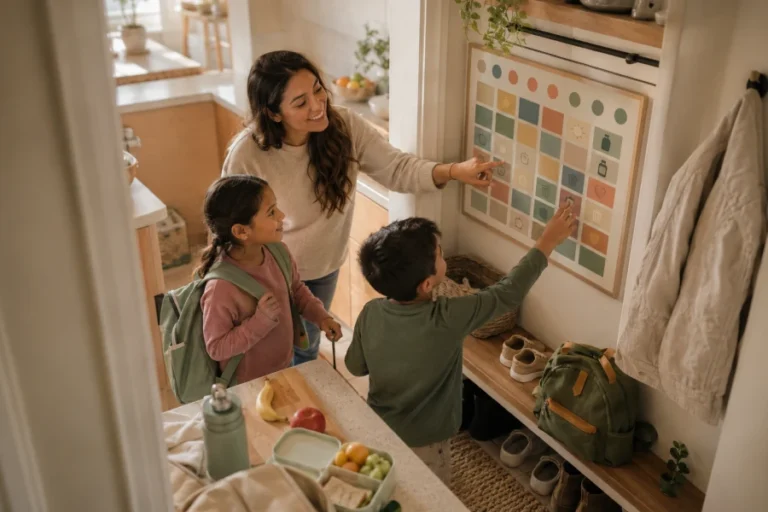
Visible progress helps children connect effort with a real contribution at home. Use simple symbols, movable tokens, or a row that fills over time. Keep the display calm and readable instead of crowded with competing decorations. A child should recognize the next task within a few seconds. The chart becomes more meaningful when adults use it consistently too. A family chore schedule with chore routine ideas keeps the plan from depending on one parent’s memory. Notice completed work with a specific observation rather than automatic applause. You put the clean towels where everyone can find them is more useful praise. That language connects the task to its practical value for other people. Progress feels real when children understand why their effort changes the room.
Rewards can be pleasant, yet they should not become the entire reason children participate. Too many prizes can shift attention away from ownership and contribution. Consider using shared privileges, choice of music, or a family activity instead. These acknowledgments connect effort to belonging rather than constant bargaining. Let natural satisfaction do some of the work whenever possible. A tidy art shelf invites the next creative project without anyone searching first. A packed backpack reduces stress during tomorrow’s departure. Those outcomes teach children that responsibility can make life easier for them. When recognition stays warm and specific, it supports motivation without inflating pressure. The chart should feel like a tool for growth, not a ticket counter.
Children outgrow chores, and a good routine should grow with them. Review tasks when a child starts finishing easily or seems bored by repetition. Add one new responsibility while keeping familiar roles steady during the transition. Older children can take over planning steps that adults once handled quietly. They might prepare snack ingredients, sort recycling, or reset a shared workspace. A chore system for busy families and teamwork at home strategy gives parents room to adjust roles fairly. Do not treat a missed task as proof that the whole routine failed. Ask whether the task, timing, or reminder needs a better fit. That approach keeps responsibility connected to problem-solving and resilience. Over time, the chart becomes a scaffold children no longer need forever.
Treat the chart as a teaching tool rather than a record of approval. Let children see that every family member has work that matters. Use calm reminders while the habit is still new and fragile. Invite a child to explain the task back in their own words. Celebrate growing independence without withdrawing support too quickly. Adjust the job when it stops matching the child’s current ability. Keep the routine connected to real household needs instead of abstract rewards. A practical chart can help children notice their own capability over time. That recognition often leads to more willingness than pressure ever could. The habit becomes meaningful when contribution feels like belonging.



Leave a comment